Loading
Showing posts with label Recipes: Easter. Show all posts

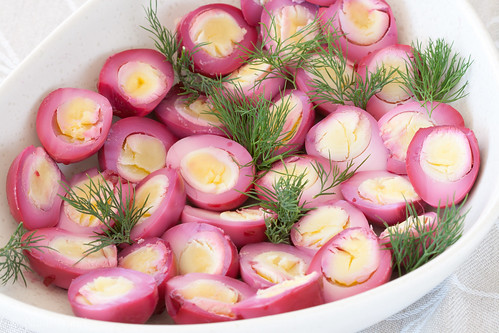
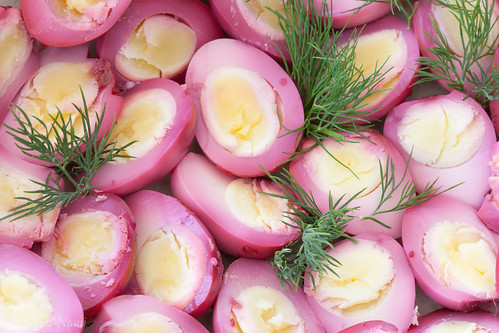
Quail eggs, dyed with beetroot

Quail eggs, dyed with beets / Peediga värvitud vutimunad

Another item I served at this year's Easter brunch. Same idea, but this time I used quail eggs and "pickled" them simply in grated boiled beetroot. They were adorable :)

Quail eggs, dyed with beets / Peediga värvitud vutimunad
Follow RecipesDream

Easter lamb for one. Or two. A recipe for grilled marinated lamb

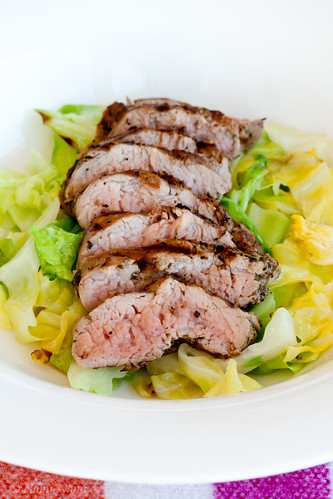
Grilled lamb filet / Grillitud tallefilee

Lamb's a popular choice for Easter, especially a slow-roast leg of lamb. However, unless you're cooking a big Easter feast, buying and cooking a whole leg for a small family isn't really sensible or economical. Here's a dish that can be successfully cooked for one, or two (or more, if you wish so). It's from Nigel Slater's excellent book Real Food. Nigel suggests a potato gratin (esp. his stove-top Dauphinoise with Pancellta and Rocket) as an accompaniment. I have always loved the combination of lamb and cabbage, and as I had bought a new season's cabbage, I served the lamb with simple sauteéd cabbage. A wonderfully satisfying and light spring-time meal.

Grilled marinated lamb
(Marineeritud ja grillitud tallefilee)
Serves 2 to 4

2-4 lamb fillets, depending on size and the number of eaters
4 large garlic cloves, peeled and crushed
2 Tbsp lemon juice (freshly squeezed)
4 Tbsp extra virgin olive oil
2 tsp dried Herbes de Provence seasoning
freshly ground black pepper

Cut _almost_ through each lamb fillet horizontally, then open it up as a book. Place on a cutting board, hit with a knife a few more times here and there to flatten the meat and to allow the marinade to soak through. Put onto a deep plate or a bowl.

Put the garlic, lemon juice, olive oil, herbs and pepper into a small jar, cover and shake until well combined. Pour over the lamb fillets, giving the meat a good massage :) Cover the plate with a clingfilm and leave in a cool place to marinade for at least an hour, preferably 24 hours.

To cook the lamb, heat a ridged grill pan until smoking hot. Place the lamb on the pan, press down with a back of a spoon and leave for a couple of minutes until the lamb fillet is golden and crusted underneath. Flip around and cook from the other side as well. The lamb should remain nicely pink inside.

Leave to rest for a few minutes, then cut into thin slices and serve.
Follow RecipesDream

Dyeing Easter Eggs with Onion Skins, Estonian style

Easter eggs / Lihavõttemunad

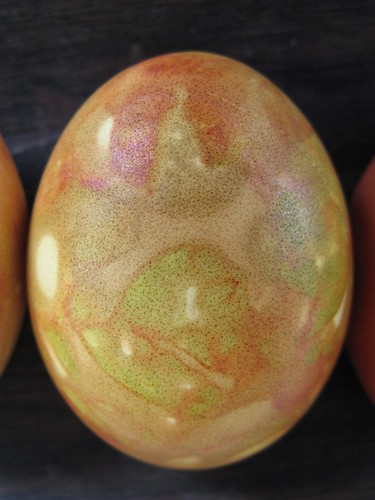
We don't really 'do' chocolate eggs for Easter here in Estonia, but real, chicken eggs. Dyeing eggs for Easter is very popular, and using onion skins is probably the most popular method. Using onion peels gives you most beautiful dyed eggs, each one unique and special. Here are some photos of the process that I took few years ago.

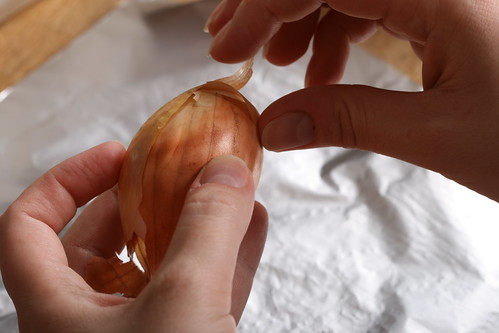
Pille, onion skins

Here's what you need to do:

* Few weeks before Easter start collecting onion peels. Yellow ones are better than red onion skins, as they give a nice colour.

* You need white eggs for doing this (this gives the shops a chance to sell specially packaged white eggs for a much higher price before the festivities).

Dyeing Easter eggs

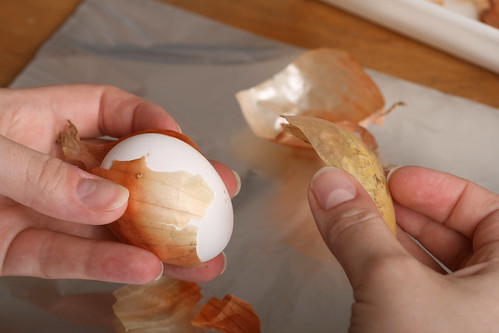
* Take an egg and neatly put few onion peels around it:

Dyeing Easter eggs

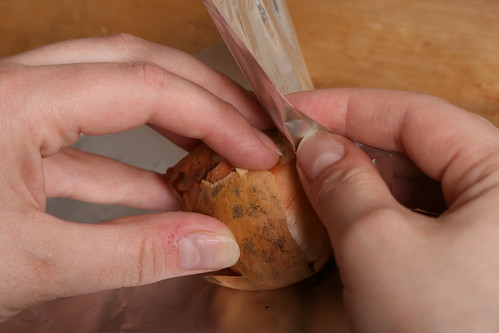
* Take a piece of mesh/muslin/kitchen foil or even an old nylon stocking and wrap it around the egg to keep the onion peels on place. I used foil here:

Dyeing Easter eggs

* Boil as usual. Cool, then unwrap and unpeel.

Here's the result:

Easter eggs / Lihavõttemunad

Natasha describes a similar, though less complicated way of dyeing eggs with onion peels that's popular in Russia and Ukraine: Russian Easter Eggs. My 91-year old grandmother uses the same method - she says she's too old to "play around" with the onion peels too much :)
Follow RecipesDream

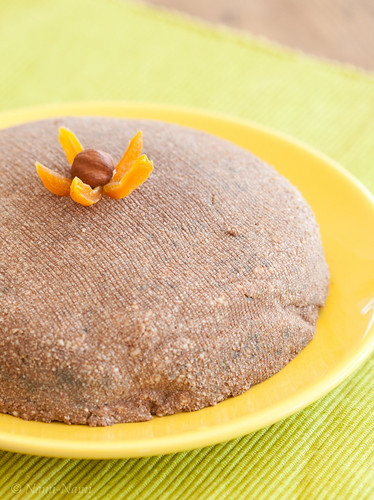
Easter paskha for chocolate lovers

Chocolate paskha / Šokolaadipasha
Chocolate paskha, 2011, decorated with dried apricots

It's Easter Sunday this weekend and many a festive table will have a paskha (also spelled as 'pascha') as a centerpiece. We will, for sure.

Paskha is a sweet and rich curd cheese dessert that's traditionally served during Easter. I've shared two favourite recipes with you before - my traditional uncooked paskha with pistachio nuts and craisins and creamy cooked paskha with egg yolks. Here's another delicious paskha, especially for those of you who love chocolate!

Chocolate paskha
(Šokolaadisõbra kohupiimapasha)
Serves 8

Easter brunch / Kevadpühade brantš: Chocolate pashka / šokolaadisõbra kohupiimapasha
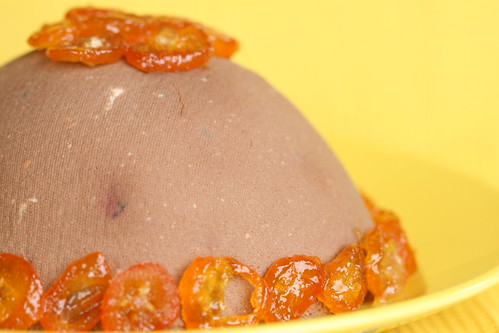
Chocolate paskha, 2009, decorated with candied kumquats

500 g curd cheese (kohupiim/tvorog) or ricotta
100 ml whipping cream
100 g dark chocolate, chopped
75 g butter, cut into cubes
50 g caster sugar
handful of dried apricots
handful of dried seedless raisins

Place raisins and apricots into a colander, pour over boiling water and drain thoroughly. Put aside.

Place cream, chocolate and butter into a small heavy saucepan and heat gently, stirring with a wooden spoon, until chocolate and butter are melted and you've got a luscious brown sauce. Remove the pot from the heat and immediately fold in the curd cheese, sugar, apricots and raisins. Mix until combined.

Line a special paskha-dish or a fine sieve with a double layer of cotton muslin that you've rinsed under cold water and wrung dry. Pour the curd cheese mixture into the dish, place a small plate on top. Place the filled paskha-dish over a bowl to collect any whey liquid that will drip out of the paskha.

To serve, turn the paskha onto a plate, remove the muslin and paskha dish or sieve.

 Decorate as you please - I love the contrast of chocolate-coloured paskha and something orange (apricots, candied kumquats etc).
Follow RecipesDream

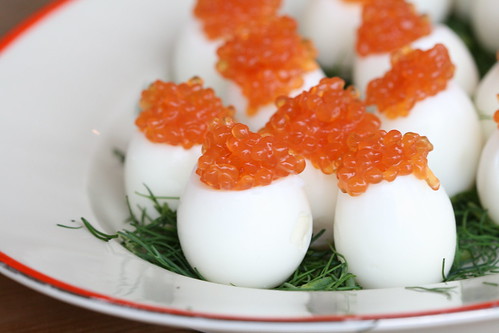
Quail eggs with whitefish roe

Quail eggs with caviar / Vutimunad siiamarjaga

Quail eggs, again :) As I've said on several occasions before, I love quail eggs in all their disguises - dipped into Pimentón de la Vera or Egyptian dukkah seed mixture, as a component in a "mushroom canapé", as topping on an Estonian wild mushroom crostini, as a filling inside salmon kulebyaka, or as a garnish on top of Estonian seven-layer salad or smoked salmon and spinach salad. This particular nibble has been briefly mentioned before (see here), but I've made them again and took a much better photo this time :)

Here's the "recipe":

Cut the top off boiled quail eggs, spoon some whitefish (or other fish) roe on top and seat the quail eggs on a bed of finely chopped dill. Serve.

(Vutimunad siiamarjaga)
Follow RecipesDream

Nami-Nami Easter Brunch 2010

Easter eggs 2010 / Lihavõttemunad 2010

Hope you all had a lovely Easter weekend, wherever and however you celebrated it! We hosted our traditional Easter Sunday Brunch yesterday, with 11 adults, 6 children and 3 toddlers around the table. Last year I tried to follow a green/yellow colour scheme. This year I simply chose dishes that made me think of spring :)

Here are the dishes from yesterday:

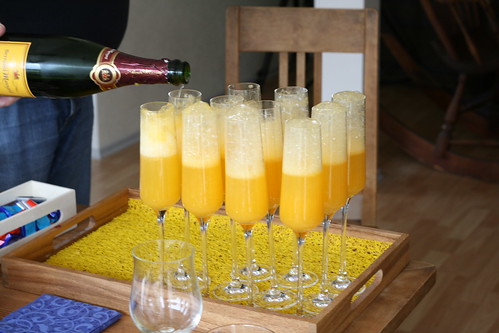
We started with Mimosas again:
Easter Mimosas 2010

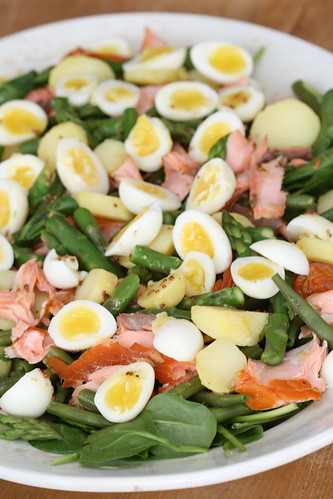
Baby spinach with hot-smoked salmon, quail eggs, green beans and asparagus spears:
Quail egg, spinach and smoked salmon salad / Spinatisalat vutimunade ja kuumsuitsulõhega

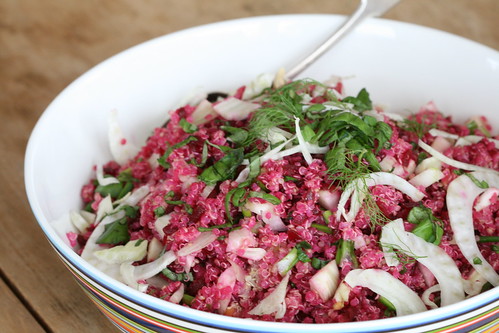
Quinoa salad with beets, fennel and basil
Quinoa and beet salad / Kinoasalat peediga

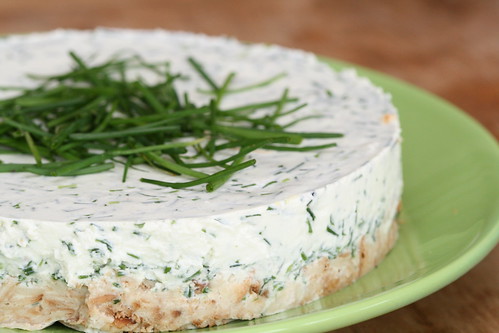
Savoury cheesecake with chives and goat's cheese:
Chive and goat cheese cake / Kitsejuustukook murulauguga

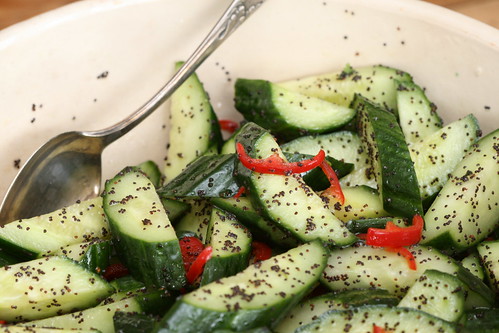
Ottolenghi's cucumber salad with chilli and poppy seeds
Ottolenghi's cucumber salad with poppyseeds / Kurgisalat mooniseemnete ja tšilliga

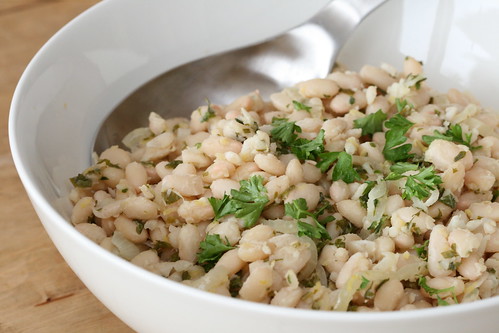
Bean salad with lemon and parsley:
Beans with parsley and lemon / Valged oad sidruni ja peterselliga

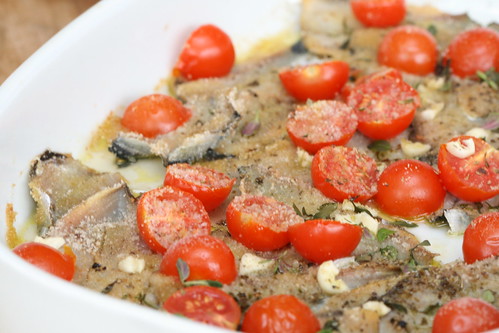
Estonian national fish, Baltic herring, with cherry tomatoes and herbs (recipe from an Estonian foodblogger Mari-Liis):
Mari-Liisi rokkivad räimed :)

Home-made Estonian cheese with curd cheese, eggs and caraway seeds, served with dark rye bread:
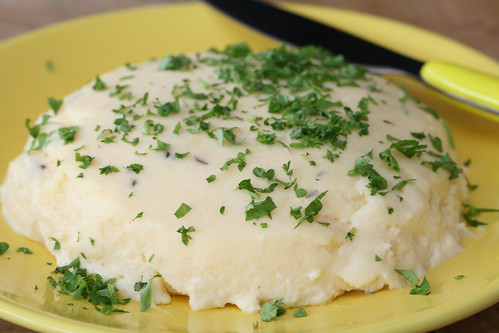
Estonian cheese with caraway seeds / Sõir e. kohupiimajuust köömnetega

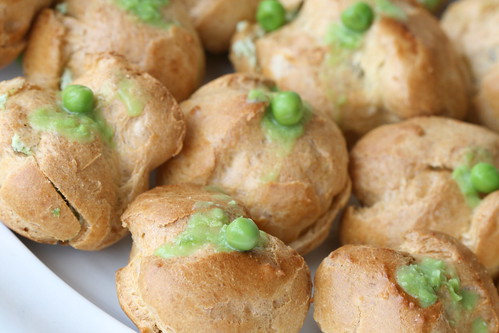
Choux puffs with ricotta, mint and green pea filling (recipe from the latest issue of the French Regal magazine; the only dish that didn't rock and won't be repeated)
Choux puffs with minty ricotta and peas / Keedutainapallid ricotta-herne-münditäidisega

As for the sweet dishes, our friends Paavo & Kristiina brought along a delicious paskha:
Pasha

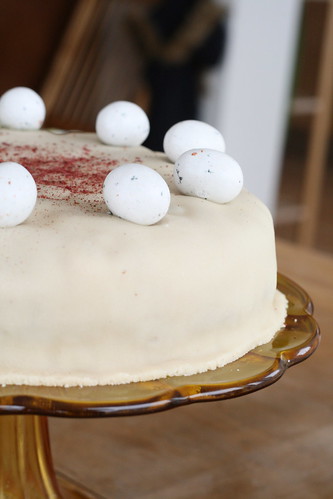
I made a traditional British Simnel cake, topped with 11 chocolate eggs that we bought from the gorgeous Péclard café in Zürich last weekend:
Simnel cake / Simneli kook

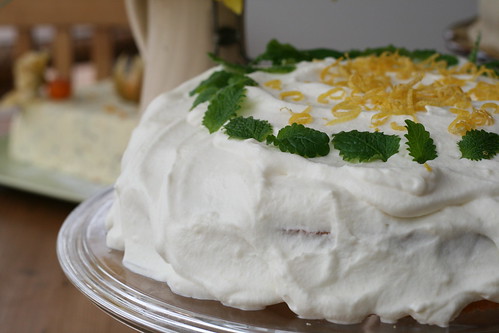
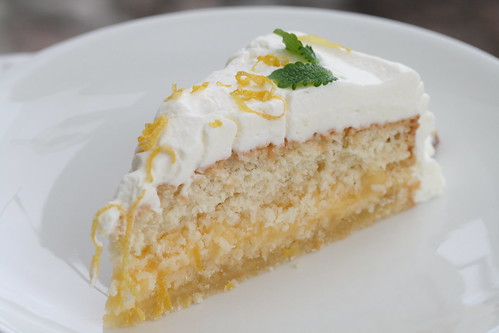
And last, but not least, a delicious cake with coconut, lemon curd, elderflower cream and lemon balm leaves (recipe from the Swedish BAKA magazine):
Spring cake with lemon curd, coconut and elderflower / Kevadtort kookosbiskviidi, sidrunikreemi ja leedrivahuga

Spring cake with lemon curd, coconut and elderflower / Kevadtort kookosbiskviidi, sidrunikreemi ja leedrivahuga
Follow RecipesDream

Another paskha recipe

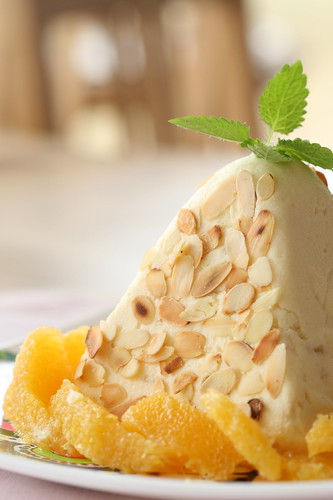
Easter paskha No 3 / Lihavõttepasha nr 3

Some of my American readers may have noticed a recipe for paskha in the April 2010 issue of Saveur. Saveur describes paskha as "a rich, airy sweetened cheese that's traditionally served in Russian homes to break the meat- and dairy-free Lenten fast. ... Made with a Russian farmers' cheese called tvorog, as well as cream, egg yolks, butter, and sugar, the treat is flavoured with vanilla and studded with golden raisins. Then the pashka is pressed into a mold and chilled to set." Although it's not traditionally Estonian, it's pretty popular here.

I happen to love pashka, and have been making it for, well, ages :) I've shared one of my favourite pashka recipes before, but there are several ways of making this dessert. There are cooked versions and uncooked paskhas, paskhas containing raw eggs, cooked eggs or no eggs. Here's one (out of three!) I made last Spring - it's uncooked, contains cooked egg yolks - and is thus quite similar to the recipe printed in this month's Saveur.

Highly recommended. The Saveur article recommends using the Friendship brand farmers cheese instead of tvorog, if you can't get hold of the real thing.

Paskha with Egg Yolks
(Kohupiimapasha keedetud munarebudega)
Serves 8 to 10

75 g unsalted butter, softened
125 g caster sugar
2 hard-boiled egg yolks
500 g curd cheese
100 ml whipping cream, whipped until soft peaks form
0.5 tsp vanilla extract
3 Tbsp candied orange peel
4 Tbsp chopped almonds

toasted almond slices and orange segments, to garnish

Cream the butter with about one third of the eggs. Press the egg yolks through the sieve and add to the butter. Add vanilla extract, the rest of the sugar, curd cheese, whipped cream, candied orange peel and chopped almonds.
Line a pashka tin or a large sieve with a wet cheesecloth square. Spoon the curd cheese mixture into the pashka mold and place the whole thing on top of another bowl or over the sink, allowing the liquid to drain (depending whether you want to catch the whey* or not).
Refrigerate in a cool place for at least 24 hours.
Turn onto a serving dish, remove the cheesecloth. Garnish with toasted almonds and orange segments.

* This can be used instead of milk or water when making yeast buns.
Follow RecipesDream

Estonian Curd Cheese Cookies


If Easter in some parts of the world is all about chocolate (no names named here :)), then in Estonia it's all about chicken eggs and curd cheese desserts. There's pashka, of course, on our Easter table - a delicious curd cheese pudding borrowed from our Eastern neighbour. But there will be other curd cheese desserts as well. Here's a recipe for some moreish curd cheese cookies that would be perfect for Easter table.

Finding curd cheese ("kohupiim" in Estonian) is not so difficult. If there's a Russian or Polish shop nearby, then ask for "tvorog/tvarog". In Finland, look out for "rahka". If you can't find curd cheese, then try substituting dry ricotta or farmer's cheese.

Estonian curd cheese cookies
(Mõnusad kohupiimaküpsised)
About 3 dozen cookies

200 g dry curd cheese
100 g butter
100 g sugar
300 g plain flour (about 2 cups)
2 tsp baking powder
1 tsp vanilla sugar
a pinch of salt

Place all ingredients into the bowl of your food processor and process until you've got fine crumbs. Transfer the mixture into a bowl and press into a dough, using your hands. Take batches of dough and roll into pieces about the size of your thumb (about 5 cm long, 1,5 cm wide). Place onto a lined baking sheet and flatten slightly with a back of a fork.
Brush with beaten egg and sprinkle poppy seeds, pearl sugar, caraway seeds - or whatever else you fancy - on top.
Bake in a pre-heated 200 C oven for about 15 minutes, until the cookies are light golden brown.
Cool and serve.
Follow RecipesDream

Georgian recipes: walnut and egg salad

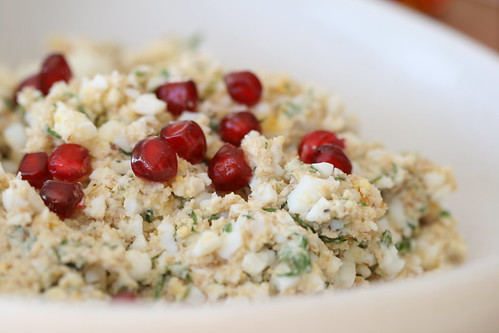
Georgian egg salad / Gruusia munasalat

In the early days of my foodblogging (we're talking about summer 2005 here), I ended up defending the joys of Georgian cuisine on Kuidaore's picture-perfect blog (note we're talking about this Georgia and not that Georgia here!). I'm still wondering where I got the courage from!! Still, we eat Georgian food with some regularity at home -simply because it's tasty and different, and I'll be sharing some Georgian recipes with you over the next few weeks. I've recently given two cookery classes focusing on this fascinating cuisine, and I do hope you enjoy the recipes as much we enjoyed the finished dishes!

There are already some Georgian recipes on Nami-Nami. I wrote about fried Suluguni cheese earlier this week, and there's a recipe for khatchapuri cheese bread and another for chakhohbili chicken and herb stew. Today I'm sharing a recipe for Georgian Egg Salad (azelila), seasoned with lots of fresh herbs and ground walnuts. It's creamy and flavoursome, and a great way to use up all those boiled eggs that you have over the Easter holidays! Walnuts are essential for this dish - as well to many other dishes characteristic to Georgian cuisine.

We served this on lightly toasted ciabatta-slices (see photo below) - not terribly authentic, but this salad is excellent on crostini, I think.

If you are interested in learning more about Georgian food, then I can highly recommend Darra Goldstein's excellent "The Georgian Feast: The Vibrant Culture and Savory Food of the Republic of Georgia" (on Amazon.com/on Amazon.co.uk). Many of the recipes I'll be sharing are based on her book, though not exclusively. There is also a nice chapter on Georgian food in Nigella Lawson's "Feast: Food that Celebrates Life" (on Amazon.com/on Amazon.co.uk).

Georgian Egg Salad
(Gruusia munasalat)
Serves 4 to 6 (or more, if served as canapés)

Georgian egg salad / Gruusia munasalat

4 large eggs
4 Tbsp butter, softened
4 Tbsp finely chopped walnuts (pestle and mortar is best)
2 Tbsp finely chopped fresh dill
2 Tbsp finely chopped fresh coriander/cilantro
2 Tbsp finely chopped spring onions (white parts only)
a pinch of salt

pomegranate seeds, to garnish

Hard-boil the eggs, then cool quickly under cold running water and peel. Put into a medium-sized bowl and "chop" until mushy with a fork. Using the fork, work in the softened butter - you want a reasonably creamy mixture.
Add the fresh herbs and finely chopped walnuts, stir until combines. Season with salt.
Place into a bowl and garnish with ruby pomegranate seeds.
Follow RecipesDream

Zucchini Rolls with Goat's Cheese aka "Makis" au Chèvre


One of the items served at the Nami-Nami 2009 Easter Brunch were courgette/zucchini rolls stuffed with goat's cheese. The recipe is adapted from a French food magazine that we get by subscription, Régal, and it was K. who made these. However, he's authorised me to blog about making these :)

They're really quick to make, and the unusual stuffing really works.

Zucchini Rolls with Goat's Cheese aka "Makis" au Chèvre
(Suvikõrvitsarullid kitsejuustutäidisega)
Makes about 3 dozens


300 g creamy goat's cheese
4 medium-sized courgettes/zucchinis
6 dried soft figs
50 g hazelnuts, peeled, toasted and coarsely chopped
a large handful of fresh mint leaves
2 Tbsp good-quality fruity extra virgin olive oil
a good pinch of Maldon sea salt flakes
freshly ground black pepper

Wash the courgettes/zucchinis. Take a vegetable peeler* and cut thin long strips of the courgette, first along the lenght of one side, when seeds appear, then another side. Put aside.
Make a filling. Chop figs finely, toast the hazelnuts, cool and chop. Chop the mint leaves.
Mix the goat cheese, figs, hazelnuts, mint and olive oil in a bowl, season with salt and pepper.
Take a strip of zucchini, place a teaspoonful of goat's cheese filling at one end and roll tightly. Repeat.
Place the zucchini rolls alongside each other on a plate.

Will keep for a few hours in a fridge.

TIP: One of my Estonian readers suggests grilling the zucchini strips lightly before using, as otherwise they might taste 'raw'. If you like the taste of fresh and raw courgette, there's no need to do that. If you dislike the flavour, then grill the vegetable strips first.

* I like the V-shaped vegetable peelers, something like this.
Follow RecipesDream

Nami-Nami Easter Brunch 2009


Here are couple of photos from our Easter Brunch 2009. We've had friends over for Easter brunch before, but never so many at once. But K's colleagues were keen to greet our little daughter Nora Adeele, and so it happened that last Sunday we had 14 adults and 5 children (incl. our own) over for some food.

In Estonia, Easter is all about eggs and curd cheese/farmer's cheese. And I mean real eggs, not the chocolate ones (as far as I remember, all British food magazines were focusing on chocolate at this time of the year. Not here, luckily). So our table was laden with curd cheese and eggs, and we tried to keep the colours spring-like (green and yellow).

To start with, we had Mimosas with freshly squeezed orange juice and some Cremant:


K. had contributed two dishes to the buffet table, both from a French food magazine Regal that we get by subscription. First bright green Pea Soup Shots, served, appropriately, in small shot glasses:


His other dish was also beautifully green: Courgette 'Maki' rolls, stuffed with goat cheese, hazelnuts, dried figs and chopped mint:


I made a peppered beef filet, using whole black, white and pink peppercorns. I must admit I was pretty pleased with the result - the meat was perfectly pink, and oh-so-meltingly tender (I served it thinly sliced, and the dish was cold):


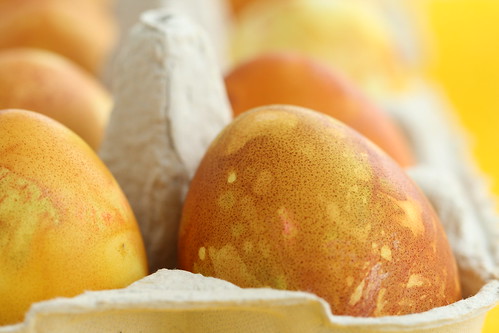
There were two types of marbled eggs. My old favourites, beetroot-marbled eggs (the purple ones), and an idea that I got from the above-mentioned Regal food magazine, marbled eggs dyed with turmeric:


More nibbles - small pieces of feta-spinach frittatas and Molly's tuna bouchons (not photographed):


There was a layered salad with surimi ('crab noodles'), eggs, onion and cheese:


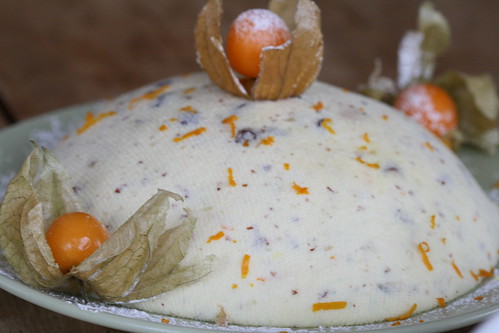
And of course there was Pashka, the traditional Easter dessert made with curd cheese. I made two pashkas for that brunch - my usual one (still a favourite), as well as a chocolate pashka. The first is garnished with chopped lemon balm and orange zest, the second one is decorated with candied kumquats:


The very yellow dessert was sort of pineapple 'carpaccio' sprinkled with mint and sugar:


And the green dessert was: Matcha Madeleines:


Here's another view of the whole spread:


And of course, there were the Easter eggs, lots of them:


What did you have on your Easter table? It'd be nice to read about that (you can leave a comment with the menu or a link to your blog post).
Follow RecipesDream
Happy Easter, everybody!


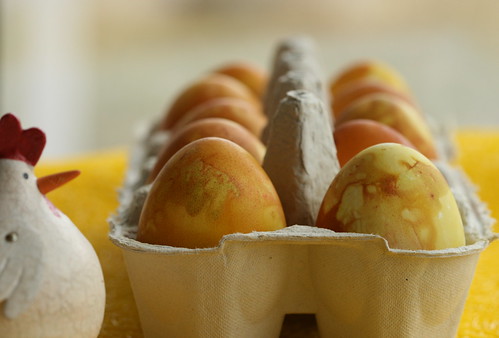
My Easter Chick and a tray of beautiful Easter eggs, naturally dyed with yellow onion skins.
Follow RecipesDream
Happy Easter!


Sherbet-coloured eggs dyed with hibiscus/karkade flowers, Tandoori curry powder, matcha tea and mate tea.
For last year's eggs see this post.
Follow RecipesDream
Marbled Beetroot Eggs


Our Easter chick and a beautiful marbled beetroot egg.

Remember these gorgeous pickled red beet eggs from last year? Yes, that lovely photo that won the award for originality in April 2007's DMBLGIT contest. Well, I was thinking about making them again this year. But then few months ago I saw an article about the Chinese marbled tea eggs and then it suddenly dawned upon me that I could use that Chinese tea egg marbling technique to dye my beetroot eggs.

And so I did. And boy, it worked! As the eggs are 'soaked' in beetroot juice for an hour only, the eggs (unfortunately) don't really pick up much of the beet flavour.

Remember to make these just a few hours before you want to serve them - once you take them out of the beet juice and peel them, the colour will fade after a few hours. Leave them for too long in the beet juice, and they'll be just purple (nothing wrong with that, of course, but they're not marbled beetroot eggs then).

Marbled Beetroot Eggs


eggs
beet juice
salt

Boil the eggs using your preferred technique (I simply bring my eggs to room temperature, then boil them for 7 minutes; but you can follow Alanna's or Kalyn's or Elise's or Thredahlia's instructions instead).
Cool under a running cold water for a few minutes, then drain.
Tap gently on a wooden cutting board to break the egg shell (I tried to roll first, but that breaks the shell too much). Do not peel!!!
Place the eggs in a bowl, fitting them snugly next to each other. Pour over enough beet juice to cover, then sprinkle with some salt to season the beet juice.
Cover and place in the fridge for an hour or two. Leaving them too long will result in simply red beetroot eggs.
Drain the beetroot juice and discard.
Carefully peel the eggs to reveal the gorgeously marbled beet eggs.
Enjoy! (We simply ate them with some mayonnaise).
Follow RecipesDream